



Family business since 1960
Promise of quality through craftsmanship perfection
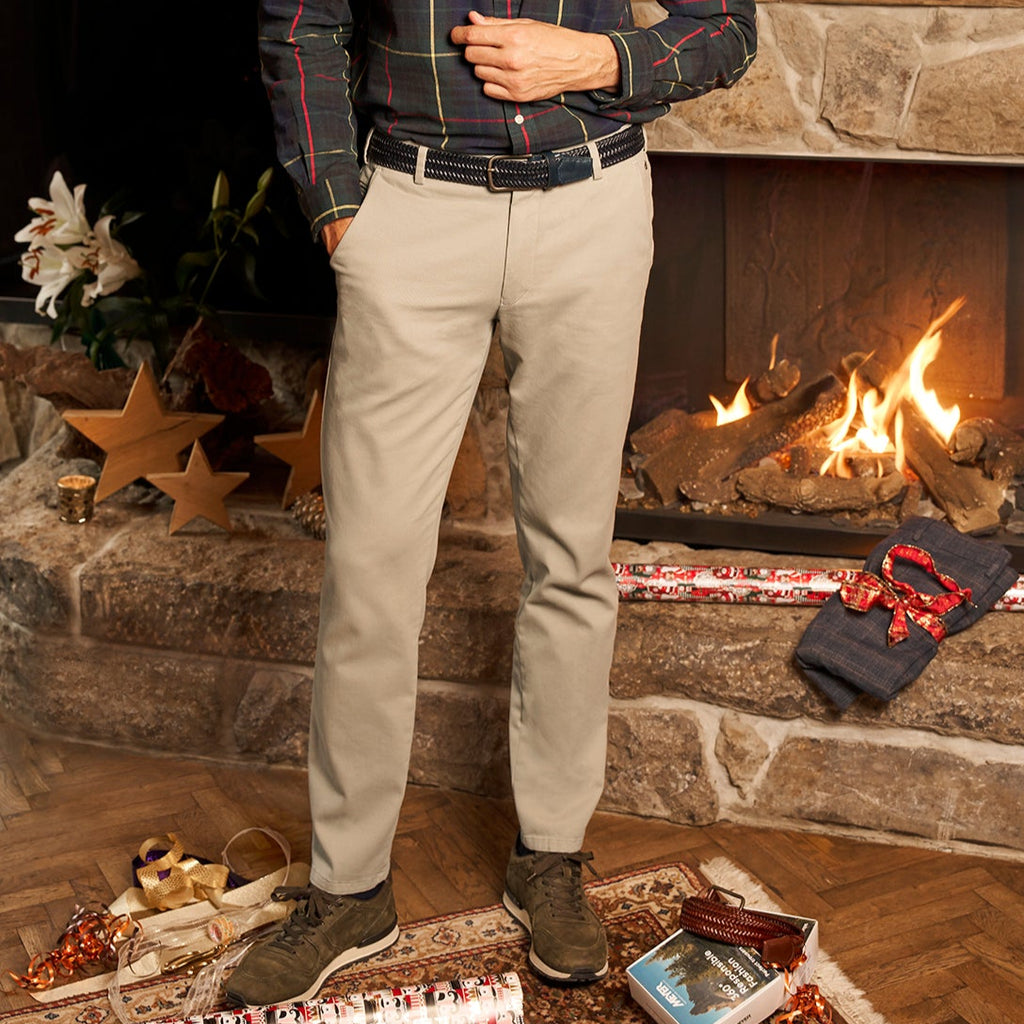

What sets MEYER apart?
The renowned family-owned company MEYER-HOSEN AG, founded in 1960 in the Oberberg region, is the leading European specialist for men's trousers. At MEYER, traditional craftsmanship combines with innovative thinking and action. Produced in Europe, MEYER trousers are characterized by their modern fits, unique details, and outstanding fabric quality.


Own production in Europe
MEYER trousers are manufactured in-house in Europe. This guarantees compliance with the latest social and environmental standards and ensures the highest quality through regular intermediate inspections after each individual production step. Since the 1990s, the production facility has been located in the Romanian city of Târgu Secuiesc in Transylvania, a place steeped in a centuries-old craftsmanship tradition. Outstanding machines from the JUKI, Pfaff, and Dürkopp Adler brands ensure the highest quality through superior seam quality. Furthermore, many production steps are performed by hand – inspired by the art of bespoke tailoring. The elaborate round waistband processing, the overturning of the pocket pouch, and the decorative seams on the back pockets are examples of this. The hollow belt loops and stud buttons are also attached by hand.


Natural raw materials
Since the company's founding, we've primarily used natural raw materials. The most important of these is cotton. In 2020, we switched entirely to pure organic cotton. For most of our other raw materials, we also rely entirely on the unsurpassed capabilities of nature. This is where fibers with impressive properties are created. Synthetic fibers are used only to give the trousers stretch qualities or special properties. These are of high quality and recycled wherever possible.
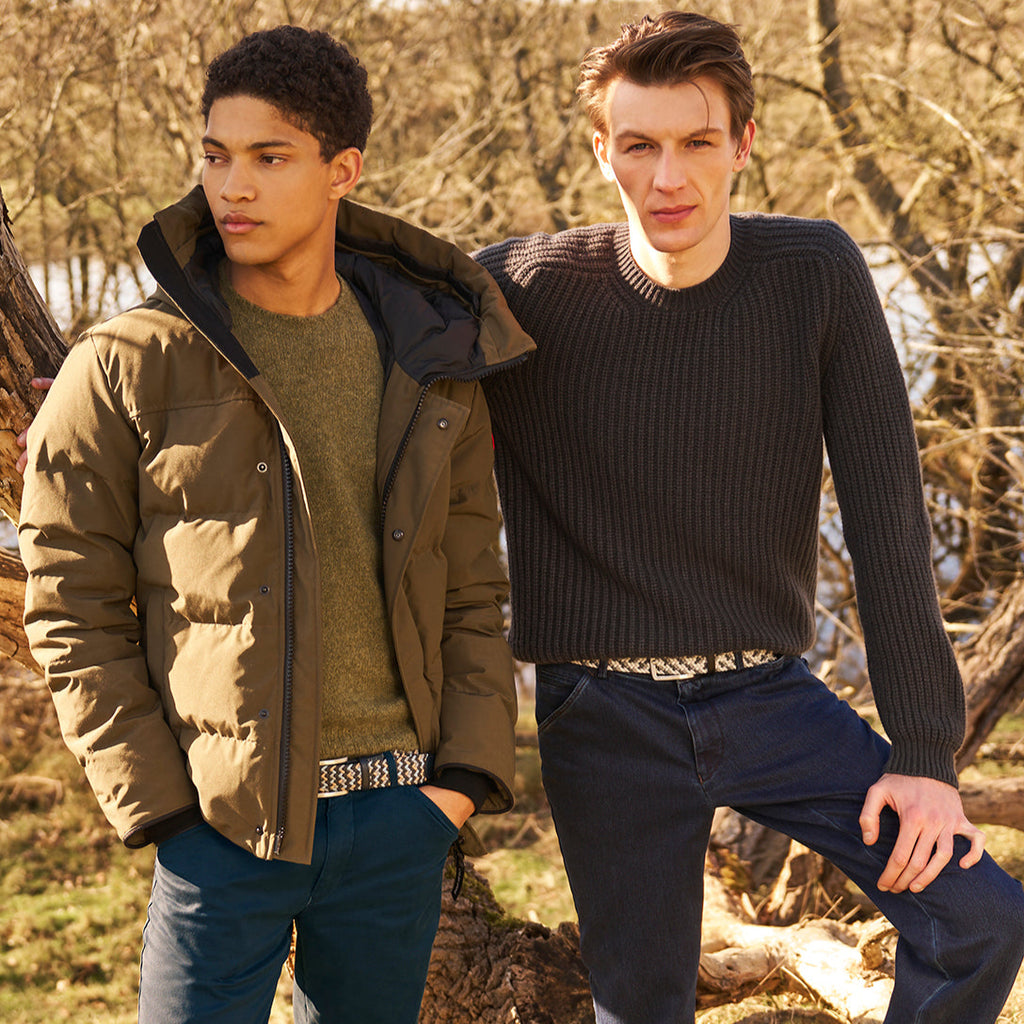

Fabrics and ingredients
MEYER-HOSEN AG works closely with European fabric suppliers on its new collections. The company has defined its MEYER quality requirements in a product pass, which are continually reviewed according to current standards. Only fabrics that have proven themselves in this way are permitted for further processing. The so-called finishing touches, such as buttons, threads, and zippers, also come primarily from Europe and are often made from natural materials or recycled.


Perfect fits
Depending on their composition, fabrics react differently to the washing process. Each fabric has its own shrinkage value. Multiple tests conducted in our in-house production facility guarantee that the perfectly tailored pieces created by the MEYER Design Center retain their shape over time.
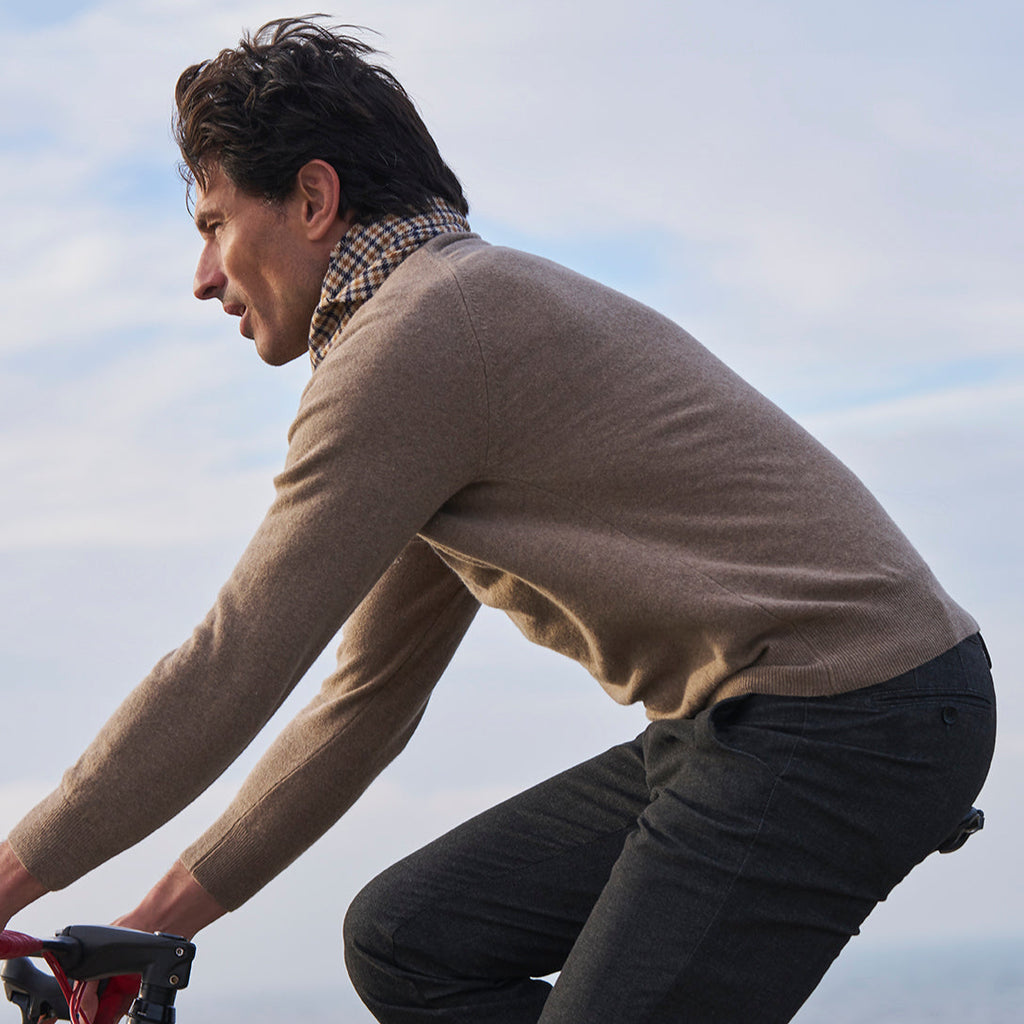

100 parts of a pair of trousers
A pair of trousers is made from around sixty cut pieces of fabric, a good 380 meters of yarn, and a few trimmings. Many of the necessary production steps are done by hand. Inspired by the art of bespoke tailoring, we like to refer to this as semi-sartorial quality.
Social responsibility
As a socially committed family business, MEYER-HOSEN AG contributes to improving people's living conditions, thus performing pioneering work in the fashion industry today. Whether in the immediate vicinity or in Romania, where its in-house production is located, the company is involved in numerous initiatives. In the Oberberg region, various projects run by local churches and fire departments are supported – such as the TAFEL (food bank). At the local hospital, the company contributes to the medical equipment of all departments. Local health centers also receive support. Orphans and children with disabilities are helped, and interactive learning equipment is donated to 38 schools in the region. More than 24 playgrounds within a 30 km radius of our city have been developed and donated. At the local school, MEYER supports Roma minorities and is involved in summer schools for 400 children annually. Nursing homes and the organization of activities for the elderly are also supported. MEYER-HOSEN AG has entered into a partnership with the local university to organize the "Silver Academy" and is committed to the local theater and the Vigado cultural center.